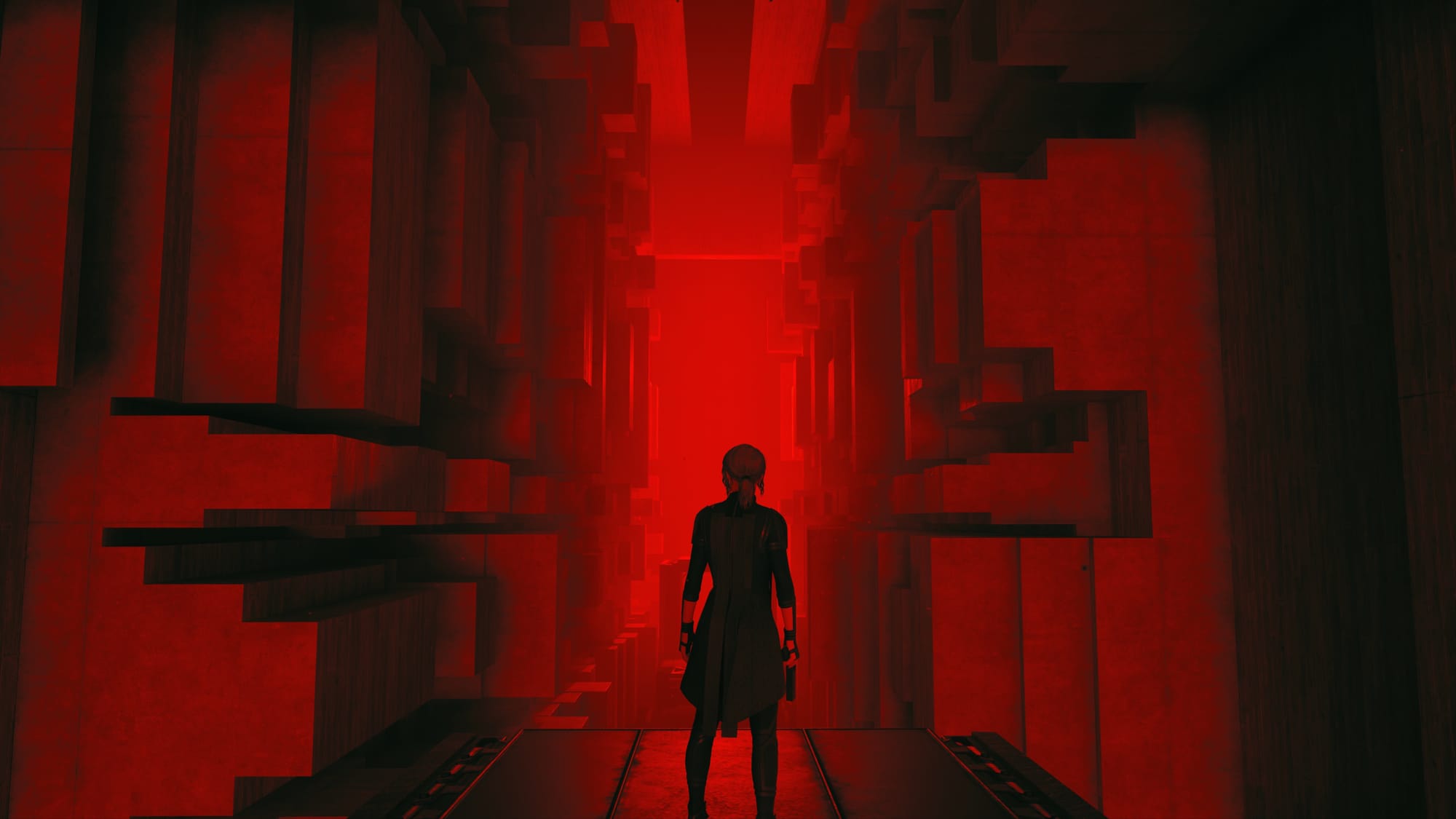
“I felt more sane in there than in life outside.”
These are Jesse Faden‘s words as she ascends in an elevator toward a Black Rock quarry. A woman searching for her missing brother, trapped in a federal building where hallways reconfigure according to laws Euclid never dreamed of. Where a government agency files paranormal rituals with the same bureaucracy it uses for memos.
And yet, there, in that impossible space, she finds sanity.
Outside, in the “normal” world, she felt insane.
Has this ever happened to you? Feeling more real in chaos than in calm. More at home in the strange than in the everyday. An inner chord that vibrates precisely where logic breaks.
Control isn’t just a video game. It’s a map of the soul disguised as a third-person shooter.
Terror and Wonder
Rudolf Otto, German theologian, coined a term to describe the direct experience of the sacred: the numinous. Not religion. Not faith. Not doctrine. Something rawer, more ancient. Jung took this concept and carried it beyond theology. The numinous, for him, was the encounter with the archetypes of the collective unconscious: universal patterns (the hero, the shadow, the sage) that we don’t learn but inherit, images that appear in the myths of every culture because they live in the common substrate of every human mind. Forces that overwhelm us because they’re not just ours—they belong to everyone. To always.
In Control, you feel it in specific moments. The first time the Service Weapon materializes in your hand and you understand that you didn’t choose it—it chose you. Or the Ashtray Maze, that labyrinth that reconfigures to the rhythm of a song while you can only surrender, trusting that the chaos holds an order you don’t comprehend but that sustains you.
The numinous isn’t sought. It finds you. And when it does, only two options remain: flee or surrender to the experience.
It has two faces that gaze at each other without blinking: Tremendum, that which crushes you, shakes you, leaves you breathless—the terror before the immense. And Fascinans, that which attracts you, calls you, enchants you—the irresistible fascination.
Lovecraft built an entire mythology around this terror: cosmic horror, madness before the incomprehensible, entities so vast that the mere act of perceiving them shatters the mind. Bloodborne turned it into game mechanics. The more Insightyou gain, the more you see. And what you see was always there. The Great Ones don’t appear; they reveal themselves. Knowledge doesn’t protect you—it exposes you. The game asks: how much truth can you hold before you break?
Control is an entirely numinous space. Every hallway of the Oldest House pulses with that double presence: terror and wonder intertwined. The Objects of Power kill you if you approach wrong, but you can’t stop approaching. The documents reveal horrors, but you keep reading. The Hiss whispers and part of you wants to hear what makes no sense.
Jesse doesn’t enter the Federal Bureau of Control (FBC for short) seeking the sacred. She enters seeking her brother. But the sacred finds her anyway. It always does.
And it needs a place to manifest.
Inner Labyrinths
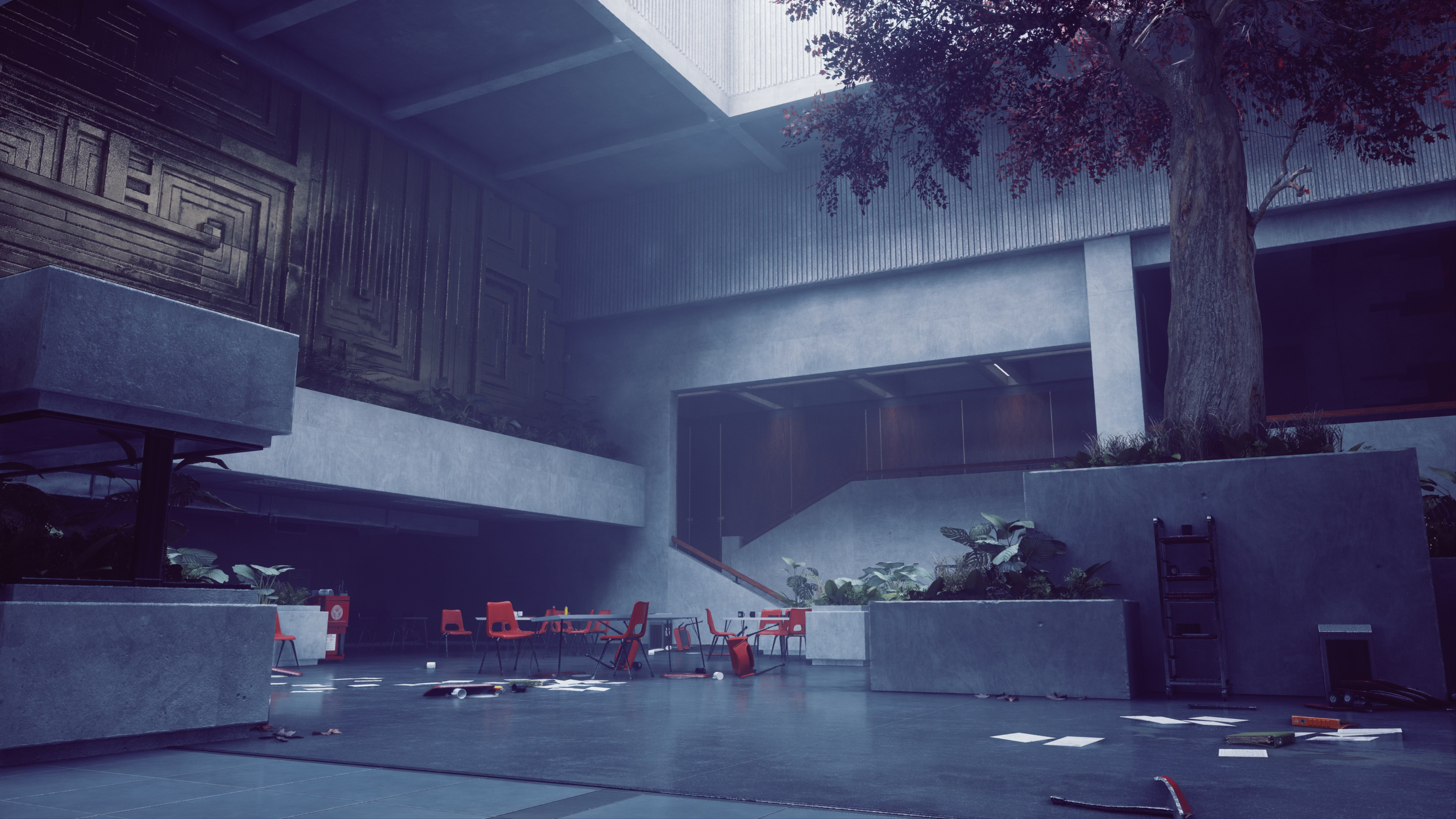
Jung described the unconscious as a house with multiple floors. The conscious above, luminous. The personal unconscious below, with its particular shadows. And deeper still, the collective unconscious: ancestral basements where the archetypes of all humanity dwell. The Oldest House is that metaphor made architecture, an ode to brutalism. It’s no coincidence that Remedy chose this style. Brutalism is architecture that doesn’t lie. It shows its raw structure, the naked concrete, the exposed pipes. It doesn’t decorate. It doesn’t hide. It is what it is. Like the unconscious when you finally face it.
And there’s something more: the building is bigger on the inside than on the outside. From the street, it seems an imposing but contained skyscraper. Inside, it holds infinite sectors, entire dimensions, worlds that shouldn’t fit. Isn’t the unconscious like this? From the outside, we seem like simple people, contained, predictable. But inside... inside there are labyrinths even we don’t know. It’s no coincidence that for centuries consciousness has been represented as a labyrinth, from Creteto Chartres Cathedral in France. The path to the center has always been a descent.
The Oldest House reconfigures according to the internal state of whoever inhabits it. Hallways change. Doors appear where none existed. Entire sectors fold upon themselves in impossible geometries. It’s not a design flaw—it’s the nature of the unconscious manifesting in Remedy‘s work. To enter the Oldest House is to enter yourself. That’s why Jesse feels more sane inside than outside. Not because the place is normal. But because, for the first time, the external territory faithfully reflects her internal territory. The chaos outside matches the chaos within. And in that coincidence there’s a strange relief. The house isn’t a prison. It’s a mirror. One that doesn’t lie.
Upon crossing the FBC’s doors, a symbol appears. A circle with internal geometry. A mandala. Jung studied mandalas across all cultures and identified them as representations of the Self: what you would be if you integrated all your parts, your deepest center, the complete version of yourself that the ego barely glimpses. They appear in dreams when the soul undergoes profound transformation. They mark thresholds.
What’s fascinating is that the mandala appears in cultures that never interacted. Tibet, the Navajo, India, the Celts, the Gothic cathedrals. They didn’t copy each other. The symbol emerged independently because it responds to something universal in the human psyche. Jung called this the Archetypal: patterns that transcend time and geography because they live in the common substrate of all consciousness. In Control, the mandala doesn’t just mark the entrance. It also protects. The HRAs (Hedron Resonance Amplifiers), powered by an entity called Hedron that the Bureau believes is the source of protective resonance, are essentially portable mandalas. The symbol of the center carried on the body. A constant reminder of who you are when everything tries to overwrite you.
To cross that symbol is to cross from the conscious world into the deep unconscious. From consensual reality into territory where symbols come alive and beliefs alter matter. Jesse doesn’t know it yet, but upon passing that threshold there’s no return to the world before. How many times have we crossed thresholds without recognizing them? Moments that seemed ordinary but later, much later, we understood that everything changed right there. The mandala marks the moment. The soul registers it even if the mind doesn’t notice at first.
All Words at Once
But if the mandala marks the threshold of entry, there’s something else waiting inside. An entity that fascinates me more than any other: The Board. Represented by an inverted black pyramid floating in the Astral Plane. It speaks to Jesse through a Hotline (an Object of Power) and its voice is a chorus. Not one voice. Several. Overlapping. Searching for each other. And it does something strange with language:

“You are the new Director/Puppet.” “We are impressed/disappointed.” “You have been chosen/deceived.”
It offers alternative words. Corrects itself. Contradicts itself. As if it couldn’t, or wouldn’t, collapse meaning into a single option. Sam Lake, creative director of Remedy, described the Board’s voice as
“an old radio transmission from another dimension.”
A signal that crosses the boundary of language at the level of being.
Kierkegaard distinguished between two types of truth: objective truths, which can be communicated directly (”water boils at 100°C”—done, end of story), and existential truths—faith, meaning, the relationship with the divine—which cannot be transmitted as information because they are experiences each person must traverse for themselves. For the latter, Kierkegaard developed what he called indirect communication: the sacred cannot be spoken directly, only pointed toward. The Board doesn’t choose one word because it operates before the collapse. It’s the field of possibilities speaking to itself. All realities coexisting until observation—Jesse’s observation, the new Director’s—chooses one. I wrote about this recently in a series of IG posts I’ve been uploading:
“The act of observing collapses a single reality. What happens to the others?”
There’s a concept in chaos theory called strange attractors. A pattern toward which a system evolves, non-periodic, never exactly the same, but always recognizable. Coherence without rigidity. Complexity without randomness. The Board is a strange attractor turned symbol within the game, one that only communicates with the FBC director, even if they haven’t yet recognized and accepted that it’s theirs. Multiple trajectories converging toward a meaning that never quite settles. It’s not that the Board can’t communicate clearly. It’s that clarity—reduction to a single word—would be a lie. Truth is multiple. The Board is honest in a way our linear language struggles to process.
But not everything inhabiting the Oldest House seeks to communicate. Some frequencies only want to overwrite you.
Overwriting
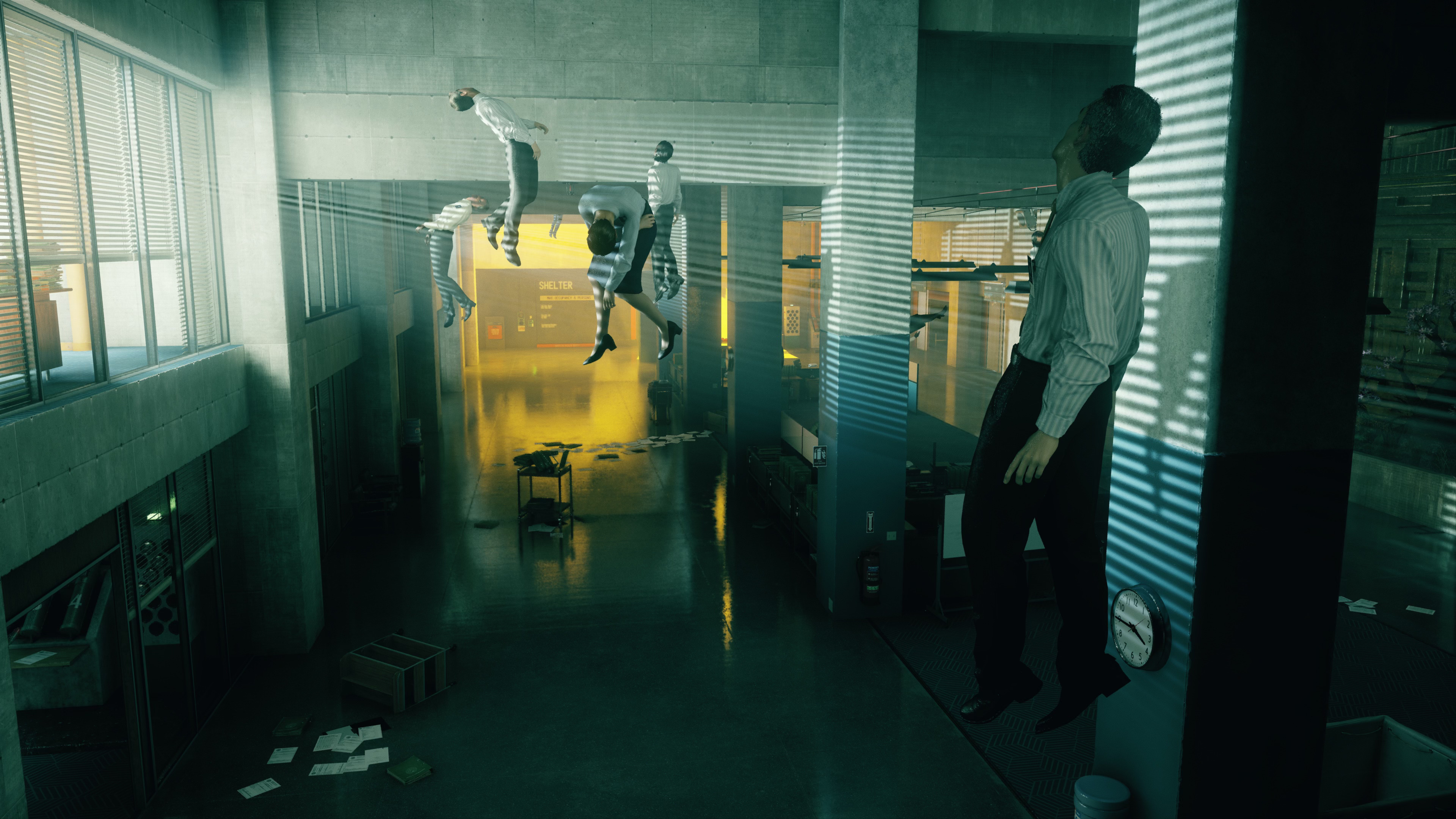
The Hiss is a hostile resonance, the enemy. An invading frequency. A whisper that possesses (a metaphor we see literally in the game). Infected FBC agents float in the air, repeating a strange mantra:
“You are a worm through time. The thunder song distorts you...”
They don’t attack because their nature is evil. They attack because they can’t do anything else. They’ve been overwritten. Their individual signal has been replaced by collective noise.
Jung called the Shadow everything we reject in ourselves and project outward. The collective Shadow is what an entire culture represses. And the repressed doesn’t disappear—it rots, ferments, and eventually erupts. The Hiss is that eruption.
You don’t defeat it with force. You defeat it with a curious device that caught my attention from the start: that same mandala from the entrance, but made at individual scale, a representation of the center in an Object of Power. The HRA devices protect agents not by attacking the Hiss but by maintaining their own coherent frequency. They don’t fight the noise—they hold the center of whoever wears them.
It’s not about destroying the shadow, fighting or defeating it. It’s about maintaining your frequency while you traverse it. Not dissociating. Not fleeing. Not fighting. Resonating with enough coherence to not be overwritten, because in the end you recognize it as part of your own duality: Darkness that nourishes Light and Light that nourishes Darkness. The shadow only asks that you observe it, because in that void lies the field of new possibilities. I find it beautiful how Control’s narrative creates an Object of Power (or as I prefer to call it here, an Object of Care): the symbol of the center, the portable mandala, precisely to avoid being overwritten. Because much is said about Nietzsche and what happens when you gaze into the abyss and it gazes back.
But the game doesn’t leave you alone facing that abyss.
The Guide That Always Was
From the game’s beginning—even implied from long before—Jesse has a guide. A presence she calls Polaris. She feels it as light, as protective frequency, as a wordless voice pointing the way. Jesse believes Polaris is external. A being from another dimension that chose her, saved her, accompanies her.
Jung described the Anima/Animus as the inner figure that mediates between what we know of ourselves and what we don’t. It’s that voice that knows things your conscious mind hasn’t yet processed. Jung framed it in terms of his era: for men, it usually appears as a feminine presence; for women, as a masculine one. But each psyche is its own universe. What matters isn’t so much the form it takes but its function: to be a bridge toward what you don’t yet know about yourself.
Jung was particularly critical of how modernity treats the soul. He wrote in Psychology and Alchemy:
“The soul cannot be a ‘mere nothing,’ but must possess the dignity of a Being to whom it is given to be conscious of a relationship with the divine.”
We’ve reduced the soul to chemistry, to pathology, to a “mere nothing” we can ignore. And what we ignore doesn’t disappear. We send the Anima into shadow, and from there it takes all kinds of forms to be seen: obsessions, projections, addictions, impossible loves. The soul demands to be recognized.
The Anima doesn’t command. It accompanies. It doesn’t impose. It invites. Throughout the game, Jesse follows Polaris. Trusts her. Lets herself be guided by that inner resonance while the outer world crumbles.
And then...
(Warning: what follows reveals the heart of the game. AKA spoilers. If you haven’t played it and want to experience it, skip to the conclusion.)
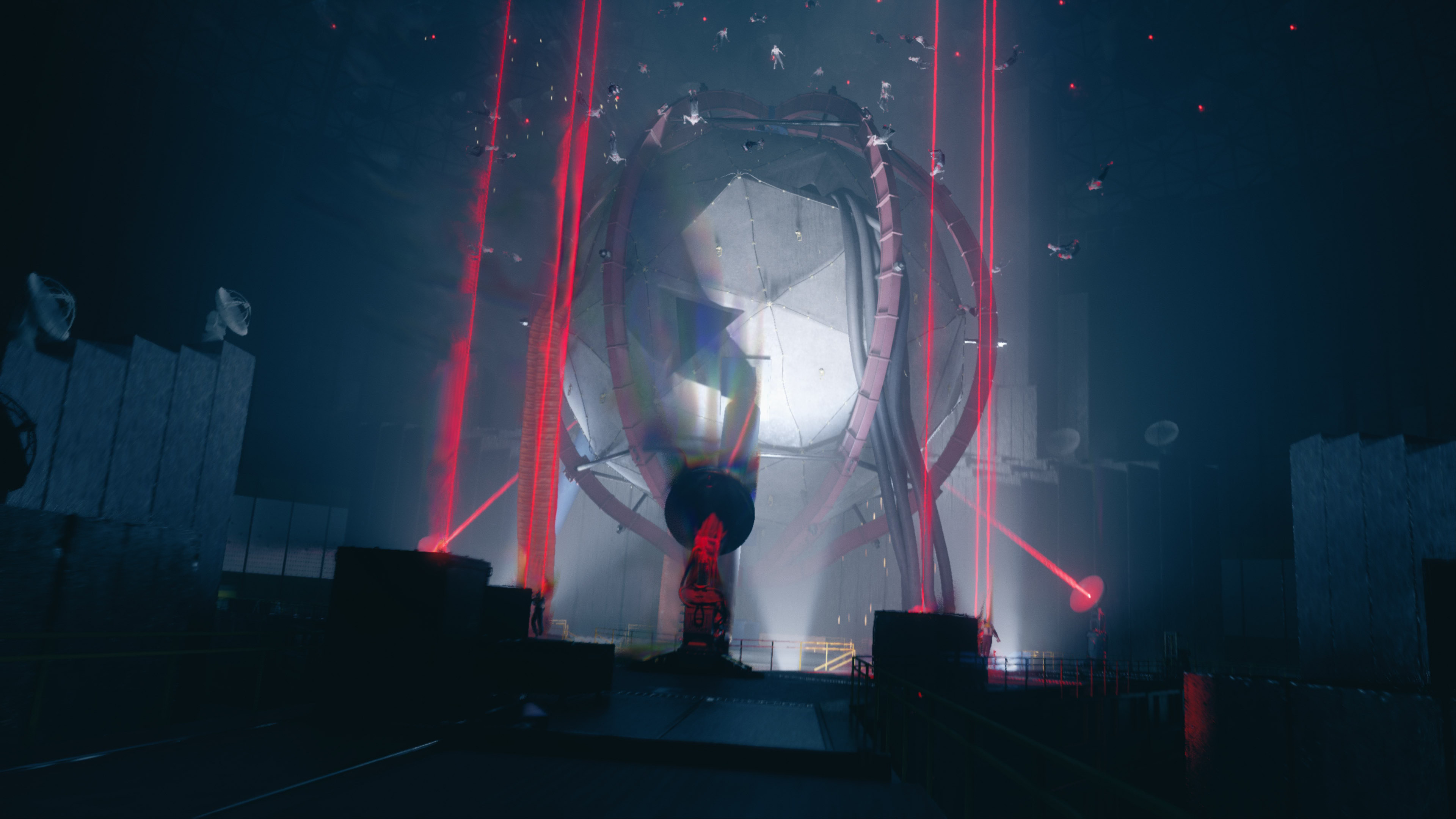
The Hiss destroys Hedron, the physical form the Bureau believed was Polaris and also the source powering and protecting the HRAs. Curious: Jesse never needed an HRA. Wink wink. We all know what that means. The devices were for those who hadn’t yet found their own center—FBC agents navigating an internal cosmos they didn’t recognize as their own.
And inside Hedron, where Jesse expected to find at least an Object of Power, there was an empty shell. Jesse collapses. The protective resonance disappears. The Hiss invades her mind. Everything that held her dissolves.
And in that moment of total dissolution, Jesse discovers what was always true: Polaris was never outside in the Hedron. It was always inside her. The guide she thought was external was herself. Her own center. Her own inner voice projected as a separate entity because she wasn’t ready to recognize it as her own.
The medieval alchemists, whom Jung studied deeply, had a name for this moment: coniunctio, the inner marriage. The moment when what you believed separate reveals itself as one. Not a fusion that erases differences, but integration that embraces them. Jesse doesn’t “obtain” power in that moment. She recognizes the power she always had. And then, finally, she accepts being Director. Not of the agency. Of her own psyche. She takes the rightful Director’s Office that was always waiting for her and that was in fact given to her at the game’s beginning, but that she never claimed as her own until this moment.
The integrated soul doesn’t need an external guide because it IS the guide. It doesn’t seek the lighthouse because it IS the lighthouse.
Symbols That Wait and Mutate
Some time ago, walking through Milano Centrale to catch a train to Trento, I found a green sticker stuck to an electrical box. It said
“Embrace Ancient Gods”
and showed a three-headed figure holding torches. Hecate, goddess of thresholds, crossroads, magic. I recognized her instantly because of my deep interest in Greek Mythology. I took a photo because it sparked my curiosity, and now that encounter is the inspiration for this new project.
Days later, in the same place, I saw a sculpture I had until then only seen from inside the station: an inverted pyramid that from the outside had a black background as if floating in an architectural threshold. I hadn’t noticed that until this moment while writing this article about Control’s Board.
It’s not that I hadn’t understood them before—they captured my attention and that was enough information for that instant, and honoring it gave way to this. It’s that it wasn’t the moment for that layer of meaning to reveal itself. Symbols work this way. They plant themselves like seeds. They wait. And when the soul is ready, they bloom. And sometimes more than once, in different tones.
The universe is subtle. But we are the ones who need time, a specific context, and the capacity to observe with consciousness in the present to see the full spectrum of a symbol and decipher its messages.
What symbols haunt You?
What images return without you understanding why?
What dreams repeat, waiting to be read?
Perhaps you already have the answers. Perhaps they’ve already been revealed and only wait for you to observe them. Or perhaps they await the right question.
